
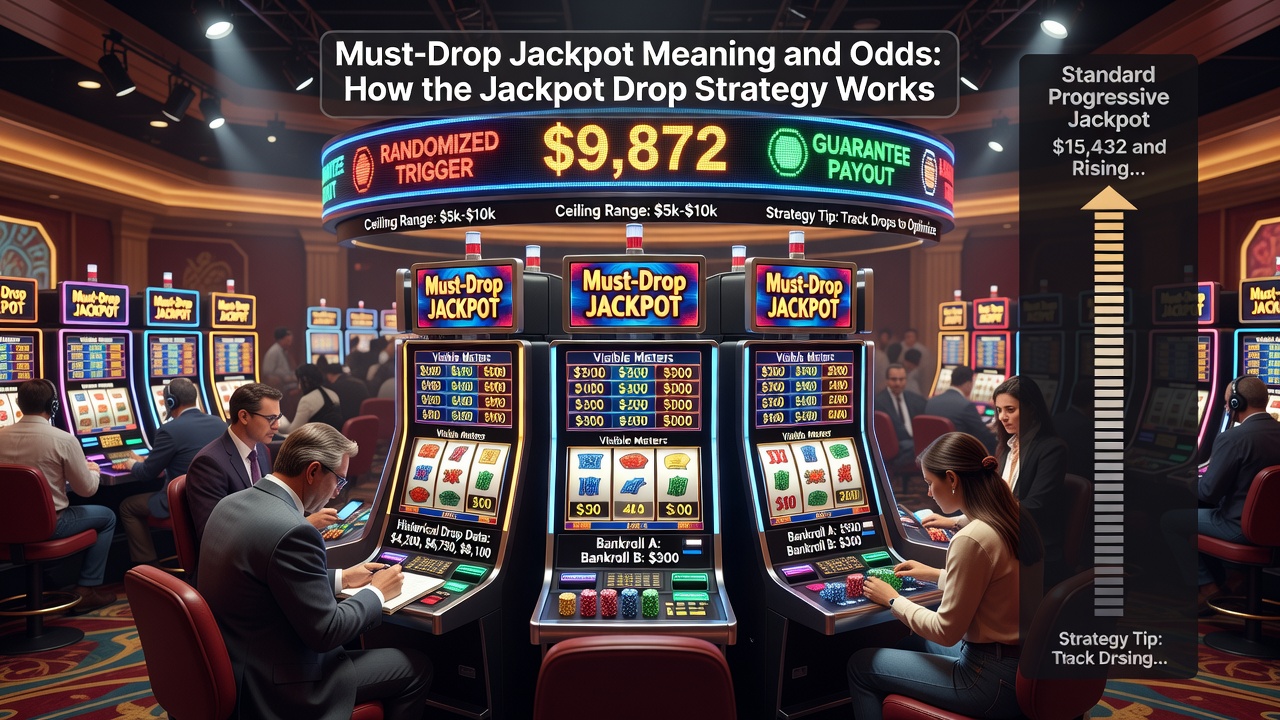
A jackpot that has to pay out before it reaches a certain number changes the math of the game entirely. Standard progressive jackpots can climb indefinitely, sometimes sitting untouched for months. A must-drop jackpot cannot do that. It has a ceiling, and once the prize pool reaches that number, the very next qualifying spin or hand guarantees a winner. This single mechanical difference reshapes how players approach timing, bankroll, and risk.
The must drop jackpot meaning sounds simple on the surface, but the practical implications run deeper than most players realize. Casinos advertise these prizes heavily because the guaranteed payout window creates urgency - players know the jackpot cannot slip past a set ceiling, so there's a psychological pull to play precisely when the meter is climbing toward that limit. Before chasing that pull, it helps to understand what is a must drop jackpot from a structural standpoint, since the mechanics behind the guarantee determine whether timing a drop actually improves your odds or simply feels like it does. That distinction separates informed players from those relying on hope alone.
This piece breaks down the mechanics, the odds, and the reasoning behind common jackpot drop strategy approaches, so you can decide whether chasing a must-drop prize makes sense for your bankroll and playing style.
What Is a Drop Jackpot and How Does It Differ from Standard Jackpots
The Core Mechanic Behind Drop Jackpots
A drop jackpot operates on a hidden ceiling. The operator sets a maximum value - say, a range between $5,000 and $10,000 - and the exact trigger point within that range is determined randomly and kept secret. As players wager on the game, a small percentage feeds the jackpot pool. Once the pool value hits the hidden ceiling, the jackpot must be awarded to a qualifying player before the counter resets. This is fundamentally different from a purely random jackpot trigger, where the prize could theoretically go unclaimed indefinitely.
Standard Progressive vs. Must-Drop Structures
A standard progressive jackpot relies entirely on random number generation for its trigger. There's no ceiling, no guarantee, and no way to predict proximity to a win. A must-drop jackpot introduces a structural guarantee: the prize will hit within a defined window. Players can often see the current jackpot value climbing on a meter, which lets them estimate how close the pool is to its unknown but bounded maximum.
Why Casinos Use This Format
Operators benefit from the drop format because it drives engagement during the climb phase. As the visible jackpot value rises, more players are drawn to the game, anticipating a payout is near. This creates predictable traffic spikes and gives the casino a marketing hook that a purely random jackpot cannot offer.
- Fixed or ranged ceiling values known to the operator, hidden from players
- Guaranteed payout before the counter exceeds the ceiling
- Visible meters that build anticipation and engagement
Must Drop Jackpot Meaning: Breaking Down the Terminology
Origins of the Term
The phrase "must drop" refers directly to the obligation built into the jackpot's design. Unlike a jackpot that "might" trigger, this one "must" trigger before a specific point. The terminology emerged from land-based and online slot ecosystems where operators wanted a clearer marketing distinction between purely random jackpots and those with guaranteed payout windows.
How the Term Is Used Across Different Games
You'll encounter must-drop mechanics primarily in slot machines, but some live casino game shows and specialty table games have adopted similar structures. The underlying principle stays consistent: a hidden ceiling exists, and the jackpot must be paid before that ceiling is crossed. Game providers sometimes brand these jackpots with unique names, but the mechanical definition remains the same across titles.
Common Misconceptions About the Term
Many players assume "must drop" means the jackpot will hit exactly at the ceiling value, every time. In reality, the trigger point within the defined range is randomized for each cycle. Another misconception is that a rising jackpot meter means you're personally more likely to win - proximity to the ceiling increases the certainty that someone will win soon, not that you specifically will.
Must-Drop Jackpot Odds: What the Numbers Actually Tell You
How Odds Are Calculated in a Ranged Ceiling System
Because the exact trigger point is randomized within a set range, the odds of hitting the jackpot on any given spin increase as the visible meter approaches the upper boundary. Early in the cycle, when the jackpot value sits near the minimum, your odds on a single spin are relatively low. As the pool value climbs toward the maximum, the probability that the very next qualifying spin will trigger the drop rises sharply, since the ceiling cannot be exceeded.
Why Odds Are Not Fixed Across the Cycle
This variable probability is the defining feature that separates must-drop jackpots from flat-probability random jackpots. A flat-probability game gives you roughly the same chance of winning on every spin, regardless of jackpot size. A must-drop game shifts the odds dynamically as the pool approaches its hidden limit, which is precisely why timing discussions around these jackpots exist at all.
Realistic Expectations Around Payout Frequency
Even at the top of the range, "must drop soon" doesn't mean "must drop on your spin." Thousands of players may be contributing to and drawing from the same pool simultaneously, particularly on networked or multi-casino jackpot systems. Your individual odds of being the one to trigger the drop remain a fraction of the overall certainty that someone will win.
- Odds rise as the visible jackpot value approaches the hidden ceiling
- Odds reset to a lower baseline once the jackpot pays and the cycle restarts
- Shared player pools dilute individual win probability even near the ceiling
Jackpot Drop Strategy: How Players Attempt to Time Their Play
Monitoring the Jackpot Meter
The most common tactic involves tracking the visible jackpot value across sessions or across multiple casino visits. Players who follow a specific game will note the value at which previous jackpots dropped, building a rough mental model of where the ceiling likely sits. This observational approach forms the backbone of most jackpot drop strategy discussions online.
Session Timing and Bankroll Allocation
A disciplined approach means allocating a larger portion of session bankroll to a game only once its jackpot meter sits in the upper portion of its historical range. This doesn't guarantee a win, but it aligns wagering with the period of statistically elevated probability rather than spreading bets evenly across the entire cycle.
Comparing Multiple Machines or Titles
Experienced players often track several must-drop games simultaneously, comparing current jackpot values against known historical ceilings for each. This lets them prioritize the game closest to its likely drop point rather than committing to a single machine early in its cycle.
Limitations of Pure Timing Approaches
Timing strategies work only as well as the data behind them. Hidden ceilings vary by range, and providers can adjust parameters between game versions. A strategy built on outdated historical drop points can mislead more than it helps.
Must Drop Jackpot Strategy: Practical Guidelines for Smarter Play
Setting a Realistic Bankroll Before Chasing a Drop
Chasing a jackpot nearing its ceiling still involves variance on every individual spin. A sound must drop jackpot strategy starts with a fixed bankroll dedicated specifically to that session, separate from funds allocated to other games. This prevents the psychological pull of "it's about to drop" from justifying bets beyond your planned limit.
Balancing Bet Size Against Meter Position
Some players increase bet size modestly as the jackpot meter climbs, on the logic that qualifying for the maximum win requires a minimum stake on most must-drop games. Confirm the qualifying bet threshold for each specific title before adjusting your wager, since missing that threshold means you could trigger the jackpot symbol combination without collecting the prize.
Recognizing When to Walk Away
If a jackpot meter resets after a win, or if the current cycle has already exceeded your bankroll's session limit, walking away is the mathematically sound choice. No jackpot is worth chasing past a predetermined stop-loss, regardless of how close the visible value appears to a suspected ceiling.
- Set a fixed, separate bankroll before targeting a must-drop game
- Confirm minimum qualifying bets for jackpot eligibility
- Establish a stop-loss and honor it regardless of meter position
Risks and Reality Checks Before Chasing a Must-Drop Jackpot
The Illusion of Predictability
Because the ceiling is hidden and randomized within a range, no player can know with certainty when a drop will occur. Historical data offers a guide, not a guarantee. Treating past drop points as fixed rules rather than probabilistic tendencies is one of the most common errors in must drop jackpot strategy discussions.
Shared Pools and Competing Players
On networked machines, many players draw from and contribute to the same jackpot simultaneously. A rising meter benefits the entire pool of participants equally in terms of probability - it doesn't favor the player who has been "waiting the longest" or watching most closely.
Responsible Play Around High-Anticipation Games
The anticipation built into must-drop formats is deliberately designed to extend play sessions. Recognizing that emotional pull for what it is - a marketing mechanic, not a signal of personal luck - helps maintain perspective and supports healthier bankroll decisions over time.
Frequently Asked Questions
Can I see the exact ceiling value of a must-drop jackpot before playing?
No. Operators keep the exact trigger point hidden, typically disclosing only the range within which it falls. You can observe the current pool value climbing, but the precise number that will force a payout stays undisclosed until the jackpot actually drops.
Does betting the maximum amount improve my odds of winning a must-drop jackpot?
Betting maximum doesn't change the underlying probability of the random trigger, but many games require a minimum qualifying bet to be eligible for the full jackpot prize at all. Check the specific game's rules, since falling below that threshold could mean missing the jackpot even if the winning combination appears.
How is a must-drop jackpot different from a fixed jackpot?
A fixed jackpot pays a set, unchanging amount whenever the winning combination lands, with no accumulating pool. A must-drop jackpot grows with contributions from player wagers and guarantees a payout before reaching its hidden ceiling, making the prize amount variable and the timing more strategically relevant.
Is it worth switching games once a must-drop jackpot resets after paying out?
Many players choose to move to a different game with a jackpot meter closer to its likely ceiling, since a freshly reset jackpot starts back near the minimum of its range. Whether switching makes sense depends on your available bankroll and how many alternative games you're tracking simultaneously.
Are must-drop jackpots more common in online casinos or land-based venues?
Both formats use must-drop mechanics, though online casinos tend to display the live jackpot meter more prominently and update it in real time. Land-based venues may use similar systems on bank of linked machines, though visibility into the exact current value can vary by venue.
Can tracking historical drop points really predict the next payout?
Historical drop points give you a reasonable estimate of the likely range, but they cannot predict the exact trigger for the current cycle since it's randomized anew each time. Use past data as a general guide for prioritizing which game to play, not as a precise forecast.