
A three-second window separates a perfect combo from a broken streak. That margin - measured in fractions of a heartbeat - is the entire premise behind the genre that keeps players tapping, swiping, and grinning at their screens long after they meant to log off. Rhythm-based entertainment has quietly become one of the most addictive categories in casual gaming, and the funky rhythm game sits right at its colorful center.
What makes this genre different from a standard arcade title is the way it fuses reflex, timing, and sound into a single continuous loop of feedback. Every beat matters. Every missed note costs you. And every successful streak feels earned rather than handed to you. Players who enjoy this kind of tension-and-reward cycle often end up exploring similar experiences, and some discover options like the one available there, where the same funky energy carries over into a slot-style format built around timing and rhythm rather than pure chance.
This piece breaks down why the funky rhythm game format works, how its time-based mechanics create genuine skill-based tension, and what separates a forgettable rhythm title from one that players return to daily.
What Defines a Funky Rhythm Game
At its core, a funky rhythm game is built on a simple contract with the player: react to the beat, and you win; ignore it, and you lose momentum. That contract sounds basic, but the execution separates mediocre titles from ones that hold attention for hours.
The Core Mechanics Behind the Genre
Every funky rhythm game relies on a few non-negotiable systems. There's a beat map - the sequence of cues players must respond to - and a scoring system that rewards precision over general effort. Miss the timing window by even a fraction of a second, and the game registers it. This is what makes it fundamentally a time-based game rather than a reaction-based one: the clock, not the player's raw speed, dictates success.
Why "Funky" Is More Than a Theme
The funky aesthetic isn't decorative. Funk as a musical style relies on syncopation, groove, and unexpected accents - qualities that translate directly into unpredictable but satisfying gameplay patterns. A funky music game that leans into this genre authentically will use basslines and off-beat rhythms to create moments of tension the player has to anticipate, not just follow.
How It Differs From Traditional Rhythm Titles
Classic rhythm games often rely on straightforward, metronomic beats. Funky variants complicate that formula with swing, syncopation, and layered percussion, which raises the skill ceiling. This is one reason the genre has aged well: it rewards repeated play instead of becoming predictable after a few sessions.
The Mechanics of Time-Based Gameplay
Timing is the invisible skeleton holding the entire genre together. Without a strict time-based game structure, there's no tension, no scoring logic, and ultimately no reason to keep playing.
Timing Windows and Scoring Precision
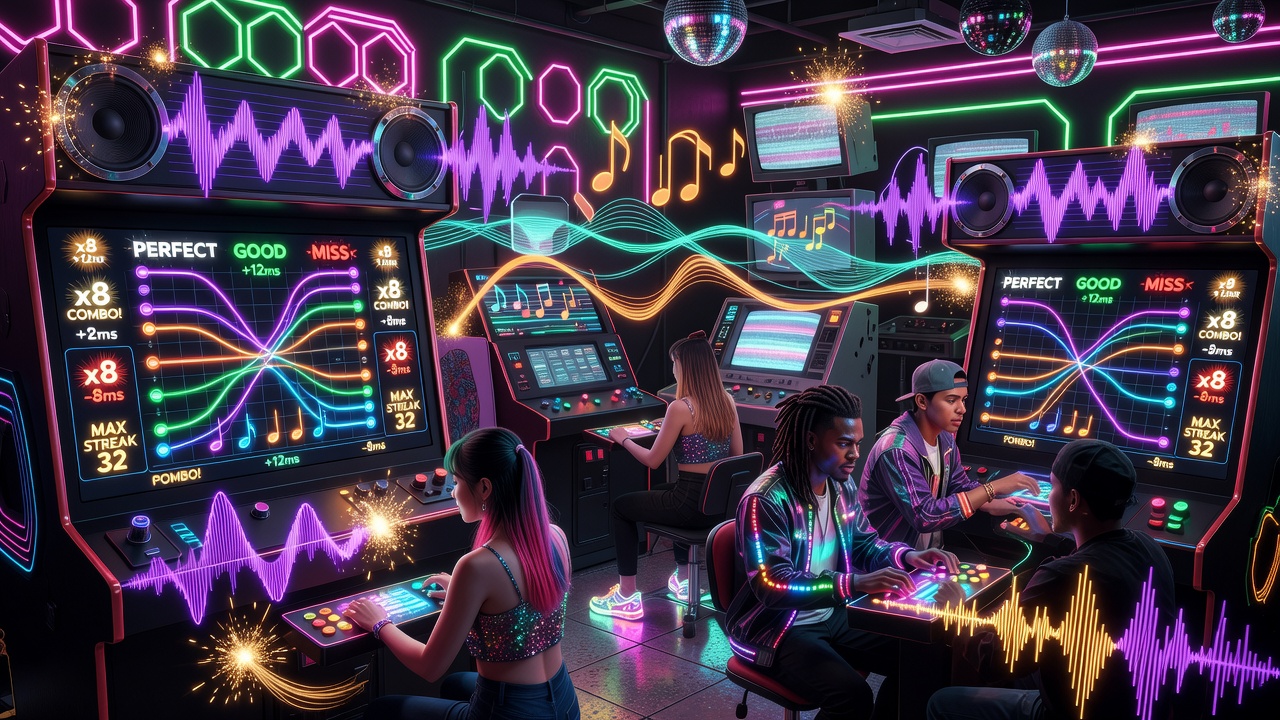
Most titles in this space divide accuracy into tiers - perfect, good, and miss - each tied to a millisecond-level window. This tiered system is what turns a simple button press into a measurable skill. Players quickly learn that consistency beats occasional brilliance.
Pressure, Pacing, and Player Psychology
A well-designed time-based game escalates gradually. Early levels teach the rhythm; later levels test whether the player internalized it under pressure. This pacing curve is why so many players describe the genre as "just one more round" territory - the challenge never feels unfair, just slightly harder each time.
The Role of Streaks and Multipliers
Streak-based multipliers exist to punish inconsistency and reward focus. A single missed beat can cut a multiplier in half, which creates real stakes even in a casual session. This mechanic alone is responsible for a large share of the genre's replay value.
Musical Identity: Why Funk Works So Well
Not every musical style translates naturally into gameplay. Funk does, and the reasons are structural, not just aesthetic.
Syncopation as a Gameplay Tool
Funk's off-beat emphasis forces players to listen more actively than they would with a straight 4/4 rhythm. This makes a funky music game inherently more engaging - the brain has to work slightly harder to predict the next cue, which increases immersion.
Basslines, Brass, and Player Immersion
Strong basslines give players a physical sense of rhythm even before visual cues appear on screen. Brass stabs and percussive accents double as gameplay signals, blending sound design with mechanical function rather than treating music as background decoration.
Sound Design as a Difficulty Signal
In well-tuned titles, audio cues often telegraph upcoming difficulty spikes before the visuals do. Experienced players learn to listen for these shifts, which adds a layer of skill that purely visual rhythm games lack.
Gameplay Depth and Replayability
A genre built on repetition needs strong reasons to keep players coming back. The best rhythm action game titles solve this through layered difficulty and variety rather than artificial padding.
Difficulty Scaling Without Frustration
Good design increases challenge through added complexity - faster patterns, denser note charts - rather than punishing randomness. This keeps the experience fair even as it becomes harder.
Variety in Beat Patterns and Level Design
Repetitive beat patterns kill engagement quickly. Successful titles vary tempo, syncopation, and visual cues across levels so that muscle memory alone isn't enough to succeed.
Progression Systems That Matter
Unlockable tracks, cosmetic rewards, and leaderboard rankings give players long-term goals beyond a single high score. These systems transform a short session into an ongoing habit.
- Precision-based scoring tiers
- Streak multipliers that raise stakes
- Adaptive difficulty curves
- Unlockable content tied to skill milestones
Why This Genre Thrives in the Arcade Space
Arcade gaming has always rewarded short, intense bursts of skill-testing play, and rhythm titles fit that mold almost perfectly.
Short Sessions, High Engagement
A fun arcade game doesn't need to demand hours of commitment. Rhythm titles thrive on two-to-five-minute sessions that still feel complete, making them ideal for quick breaks or casual competition among friends.
Accessibility for New Players
Unlike many skill-based genres, rhythm games have a low entry barrier. Anyone can tap along to a beat; mastering the nuances takes time, but the initial learning curve is gentle enough to keep newcomers from bouncing off immediately.
Competitive Appeal and Score Chasing
Leaderboards and score comparisons give the genre a competitive edge without requiring direct player-versus-player interaction. This makes the rhythm action game format appealing to both casual players and those chasing perfect runs.
Choosing the Right Funky Rhythm Game for You
With so many variations available, picking the right title depends on personal taste in music, difficulty preference, and session length.
Matching Music Style to Play Style
Players who enjoy fast reflex challenges should look for tracks with dense, syncopated patterns. Those who prefer a smoother experience may gravitate toward slower funk grooves with more predictable phrasing.
Evaluating Difficulty Curves Before Committing
Try a few early levels before judging a title. A steep initial curve often signals frustration ahead, while a gradual ramp-up usually indicates thoughtful design.
Session Length and Replay Value
Consider whether you want quick five-minute sessions or longer play periods with unlockable progression. Both formats exist within the genre, and neither is inherently superior - it's a matter of matching the game to your available time and attention span.
Questions?
What makes a game qualify as a funky rhythm game rather than a standard rhythm title?
The distinction comes from the music style itself. Funky rhythm games use syncopated, groove-heavy tracks with off-beat accents, which demands more active listening and creates less predictable timing patterns than standard 4/4 rhythm games.
Do these games require musical training to play well?
No formal training is needed. Timing accuracy improves through repetition and pattern recognition, not musical theory knowledge. Many skilled players have no musical background at all.
Why do time-based mechanics matter so much in this genre?
Time-based scoring turns a simple tap into a measurable skill by rewarding precision within strict windows. Without this structure, there would be no meaningful difference between a skilled player and a beginner.
Are funky rhythm games suitable for short breaks or only long sessions?
Most are designed for short bursts of two to five minutes, making them well suited to brief breaks. Longer engagement comes from replaying levels to improve scores rather than extended single sessions.
What should a beginner look for when choosing a title?
Look for a gradual difficulty curve, clear audio-visual cues, and music that matches your personal taste. A title that feels enjoyable at low difficulty usually scales well as challenge increases.
Can rhythm accuracy actually be improved with practice?
Yes. Timing accuracy is a trainable skill, similar to reaction time in other fast-paced games. Regular play sharpens anticipation of beat patterns, which directly improves scoring consistency over time.